Cisco AI Technical Practitioner (AITECH)
Achieving the Cisco AI Technical Practitioner (AITech) Certification: My Journey and Insights
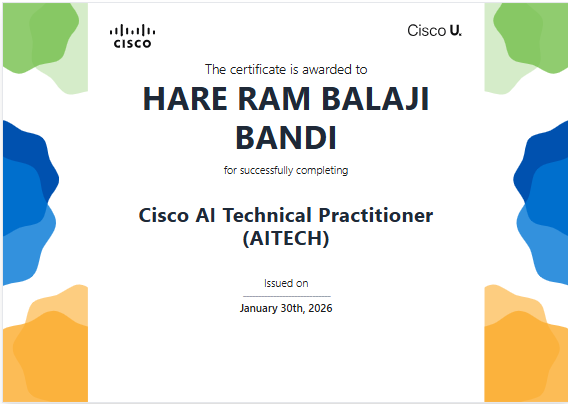
The tech landscape is evolving faster than ever, and artificial intelligence (AI) is at the forefront of this transformation. As someone passionate about networking, automation, and AI, I recently took a significant step in my professional journey by pursuing the Cisco AI Technical Practitioner (AITech) certification. Today, I want to share my experience, insights, and the value this certification brings to professionals in the networking and AI space.
What is Cisco AI Technical Practitioner (AITech)?
The Cisco AI Technical Practitioner (AITech) is designed for professionals who want to build foundational AI and machine learning skills specifically tailored for network environments. Unlike general AI courses, this certification emphasizes practical application in networking, security, and operations, aligning with Cisco’s AI-driven solutions.
Key areas of focus include:
- AI and ML fundamentals: understanding supervised, unsupervised, and reinforcement learning.
- AI in networking: predictive analytics, automation, and anomaly detection.
- Cisco AI solutions: tools like Cisco DNA Centre, AI Network Analytics, Cisco Meraki AI features and others.
- Data handling and preprocessing for network AI projects.
The exam evaluates both theoretical knowledge and hands-on understanding of AI implementations in real-world network environments.
Why Pursue AITech?
- Future-proof your career: AI is reshaping IT operations. AITech equips you with the knowledge to integrate AI into networking practices.
- Hands-on skills: It’s not just theory—Cisco emphasizes lab-based learning and practical application.
- Industry recognition: Cisco certifications are globally respected, signaling your expertise to employers.
My Journey to Passing AITech
Preparing for AITech was both challenging and rewarding. Here’s a breakdown of my approach:
- Structured Learning
I started with Cisco’s official learning resources, including the AI Technical Practitioner learning path, which provided a comprehensive overview of AI concepts, networking applications, and practical labs. - Hands-On Labs
Cisco’s sandbox environments were invaluable. Practicing AI-driven analytics and automations in a lab setting made theoretical concepts tangible. - Community & Discussion
Engaging in forums, study groups, and LinkedIn discussions helped clarify doubts and provided insights into practical use cases. - Consistent Practice
I dedicated time daily to review concepts, complete practice labs, and solve scenario-based questions. Regular revision helped reinforce learning.
Finally, after focused preparation, I took the AITech exam and successfully passed it—a milestone that validated my understanding of AI in networking.
Key Takeaways
- AI is not just hype; it is transforming the way networks are monitored, managed, and optimized.
- AITech certification bridges the gap between AI knowledge and real-world networking applications.
- Success comes from a combination of structured study, practical labs, and community engagement.
Conclusion
Achieving the Cisco AI Technical Practitioner certification is more than a credential—it’s a commitment to staying ahead in the AI-driven networking era. For anyone looking to expand their skill set in AI and networking, AITech is a solid foundation and a stepping stone to advanced Cisco AI certifications.
The journey is challenging but incredibly rewarding, and passing the exam is a proud moment that demonstrates both skill and dedication.
If you’re exploring AI in networking, AITech is worth every hour of preparation. The knowledge you gain doesn’t just help you pass an exam—it equips you to implement AI solutions that can revolutionize networks and IT operations.
Finally Cisco give free CE to add value for you.
Happy Labinggggggggggggggggggggggggggggggg!